
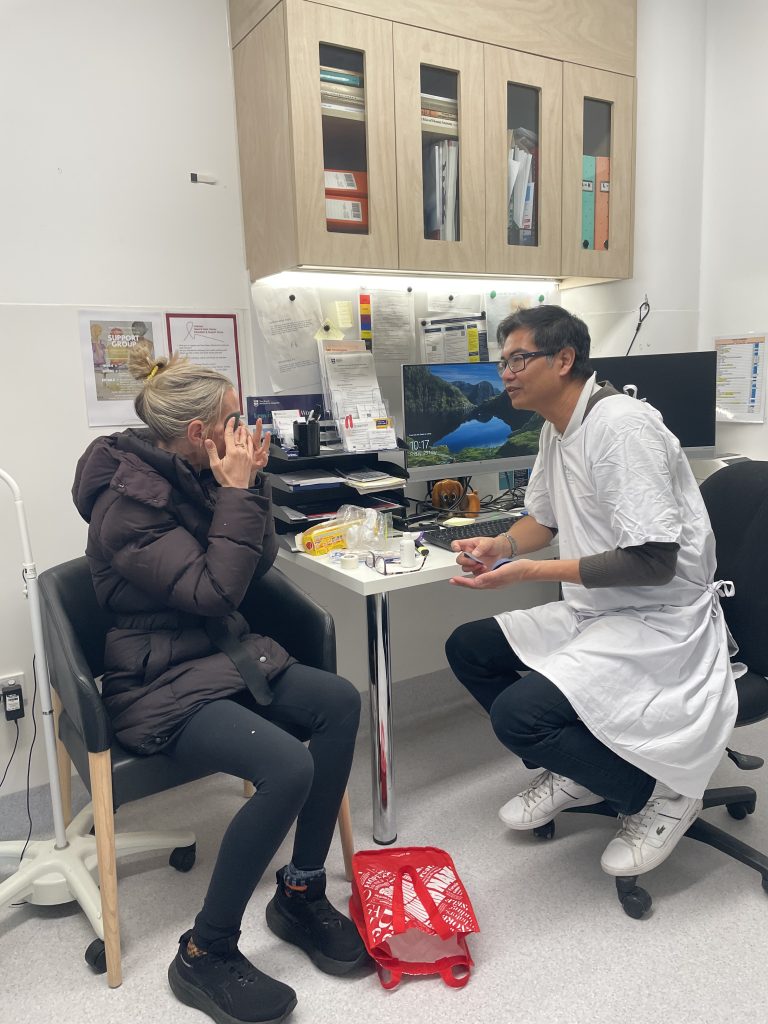
 The doctors ask me “How severe is your pain from 1 – 10?” and I never really know how to answer that.
Each time this questions is posed, I chuckle inside thinking, ‘How is my rating of 5 an accurate measure of how my pain impacts what I do?’
My pain levels are normal now so what is 10 for some, is probably 1 to me. Surely this rating doesn’t determine each individual’s level of discomfort accurately.
How does that 5/10 tell the doctor that you couldn’t dry your hair that morning because your pain was so bad? The effort and discomfort entailed in holding the hair dryer up was too painful, but is that only a 5?
I write in my book:
By then painkillers had become part of my daily routine, the strongest ‘over the counter’ ones I could buy. I was measuring my day in six-hour segments, waiting until I could take the next dose, even though they weren’t even touching the pain. I was grumpy and irritable and it began to affect those around me. As well as the pain there was the lack of sleep and, combined with the clumsiness, I was finding it increasingly difficult to function.
Reinventing Emma, page 20
Surely from each individual’s experiences and stories, a doctor can only gauge the severity of pain and impact that is has on each person. We need to flesh out a person’s experience of pain to accompany any rating.
A number on a pain scale will never accurately translate the impact that pain can have on a persons day-to-day life. Surely there is a much more important question that needs to be asked. “Tell me how your pain stops you doing what you want to in your everyday?” Perhaps we could ask a patient to describe one task that they have experienced differently due to their pain at that time.
When we can accurately articulate how pain inhibits our day-to-day life, it gives a far better insight into what that pain actually inflicts on a person.
What question/s could you be asking instead of the pain scale to determine how someone is really feeling? We can also consider how someone might be managing their pain differently if they’re experiencing it on a different scale.