
Recently I travelled to NewCastle to present a keynote at the Midwifery & Nursing Committee’s conference on innovation in healthcare. It was a great moment for me, not just as an occupational therapist, but as a stroke survivor and a person with lived experience of disability. I love that when I deliver keynotes and sit there, I have the rare opportunity to share both perspectives at once, the therapist who once prescribed equipment… and the person who now is reliant on it.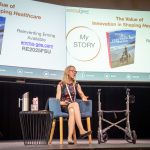
After the keynote, the committee posed a facilitated question to deepen the conversation:
Can you share an example from your recovery where your lived experience has not been included in new innovation? What were the problems or ramifications for you?
It was such a thoughtful question that really explored what truly matters from my lived experience. I guess they wanted to know if the innovation actually works for the person using it?
 So, I shared a story about my experience of innovation specific to my visual challenges. I can’t read easily so have become more reliant on listening to any papers or scripts on audible. the story was detailing my experience trying to use a new devise to making reading less taxing . Basically explaining how exciting new is Innovation… but then also detailing the reality that followed.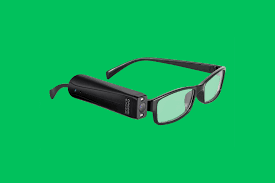
A few years ago, I was introduced to a device called an Orcam. It is basically a little camera that clipped onto the arms of my glasses. It was amazing – it could read aloud printed text when I pointed it at a page.I have put a video here of me using it! Basically, for someone with a visual impairment, this sounded life-changing. I was excited. Hopeful. Determined to try it.
 Vision Australia showed it to me in person in their show room so it was already set up and working fine. I listened as it read a page of text to me and I thought, Yes. This is what I need.
Six months later, after securing funding, the device arrived on my doorstep.
And that’s where everything fell apart.
The instruction manual (the thing I needed in order to get the device up and running) was printed in tiny font, impossible for me to read. I couldn’t even start. This expensive, promising piece of technology sat there, useless, simply because nobody had thought about whether a visually impaired person could read the setup instructions.
When a friend eventually helped me, I discovered something even more disheartening. Basically, setup wasn’t a one-off process. I would need to go through several fiddly steps every single time I used it. More time, frustration. More effort.
And then there was my ataxia (my shaking limbs or wobble). Annoyingly, the device required steady hands to aim it accurately. Instead of capturing the text I wanted, it jumped to the wrong line or lost focus completely. Each attempt brought more frustration than the last. In the showroom, my ataxia asn’t as bad, but of course it displayed itself when I was at home alone.
Eventually, I gave up.I felt so guilty that a great expensive device was sitting unused in my bedside drawer that I donated it back to Vision Australia. Not because the technology was bad in theory. It would’ve been game changing, but because my lived experience had not been part of its design.
 What struck me most wasn’t just the inconvenience. It was that one’s lived experience had been overlooked.I think the designers had imagined what a visually impaired person might need, but I don’t think they even considered someone’s lived experience. They hadn’t factored in:
-
What setup would be like for someone who can’t read the manual.
-
What repeated, complex steps feel like for someone living with neurological fatigue.
-
What fine-motor demands mean for someone with ataxia.
-
How hope can turn into discouragement when technology promises freedom but delivers frustration.
Innovation is often celebrated for what it can do when everything is just right. But people don’t live in perfect conditions, we live with complexity, fluctuation, fatigue, grief, adaptation, and resilience.
I think real innovation considers all of that.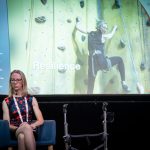
As my audience were all healthcare workers whether they were clinicians, designers or leaders, I invited them to really incorporate one’s lived experience into new innovation. I stressed that quite often we are often drawn to “new” solutions. New apps, new devices, new procedures. And sometimes they do work and are life-changing… .But sometimes the older, simpler, less glamorous option is actually better for a person at that moment in their recovery.
So I asked them to reflect on their practices and consider if we are designing technology for a moment… or for the whole lived experience of the person using it?
And even more importantly, I encouraged them to contemplate, Whose voice has been included in shaping that innovation?
My experience with the Orcam wasn’t just about one device. I could share a zillion experiences where it’s not made my experience easier. In fact the innovation developed only often makes things harder and more frustrating. It’s really about the GAP that does exist between the designer’s intention and the overall outcome!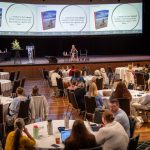
Whilst new technology gives us so much hope…but it can be brutal when it gets it wrong.
 We can do better when we listen. co-design and acknowledge that lived experience is not an afterthought, it’s an essential part on any development.