
 Today I had Botox injected into the left side of my face to help manage my facial palsy. People often hear the word “Botox” and immediately think of a frozen forehead to align with beauty standards.
It’s not that at all for me; It’s a necessary medical treatment.
After my stroke in 2015, the right side of my face was paralysed. By injecting Botox into the stronger side of my face, it helps rebalance the muscles so the weaker side has more chance to move. It improves symmetry, but far more importantly, it improves function. Little things that others take for granted like eating, swallowing, smiling and talking become possible for me again.
Over the last few weeks, as the Botox has worn out of my system, I’ve noticed just how much I rely on it. Eating has become harder as chewing takes a lot of effort. My speech has become less clear, meaning people struggle to understand me. That causes frustration for them, but also enormous frustration for me because repeating yourself when talking already takes so much effort is exhausting.
What I’m grappling with lately is the fear that as I age, the effectiveness of this treatment is changing. It doesn’t seem to last as long as it once did. The benefits wear off quicker and the gaps between treatments feel longer and harder. That’s scary when something you depend on medically suddenly feels less reliable.
There’s also the strain financially as I self-fund these appointments every three months. This is not covered by my private medical insurance or any scheme so I do need to factor in this ongoing cost. Disability and ageing together are gruelling enough physically, but financially they create another layer of stress that people often don’t see.
Whilst grappling with these issues, I’m also faced with ongoing discomfort from one of the screws used during my craniotomy. The screw securing my skull has become loose and presses painfully against my glasses. Years ago, I literally had a “screw loose” that became infected and had to be removed, so I know not to ignore this. I’ll need to see a neurosurgeon to work out how to manage it before it potentially becomes something more serious.
Seeing the neurosurgeon is another appointment and addition cost to factor.
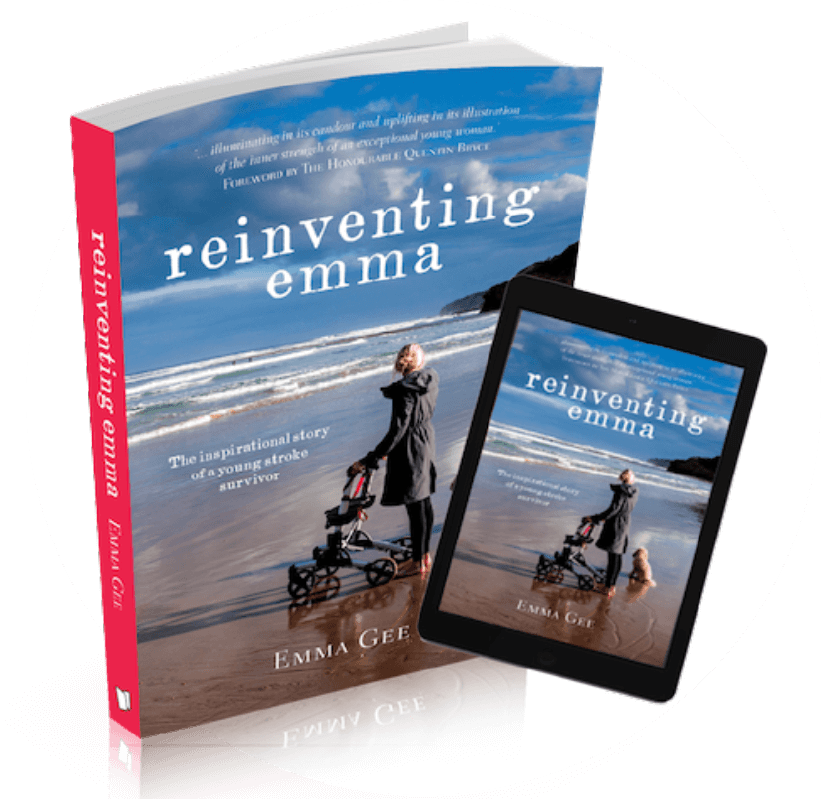 I write in my book:
The financial toll is immense. Instead of saving for holidays or my kids’ school fees, I’m paying for medical aids and procedures. What’s more, I am not able to work as I once did. It’s physically and emotionally taxing, but I have to factor in room to incorporate my ongoing stroke recovery needs.
Reinventing Emma, Page 227
The ongoing impact of disability is huge. It doesn’t end after rehabilitation. It evolves constantly, demanding ongoing management, decisions, advocacy, appointments, treatments, and finances. I’ve found that I have to choose my battles because there are simply too many to fight all at once.
Sometimes people think resilience means being endlessly positive. However, resilience is just continuing to show up to another appointment, injection or specialist because your quality of life depends on it.