 There’s something incredibly rewarding about knowing that my lived experience of stroke rehabilitation continues to inform research, even more than 20 years after my stroke.
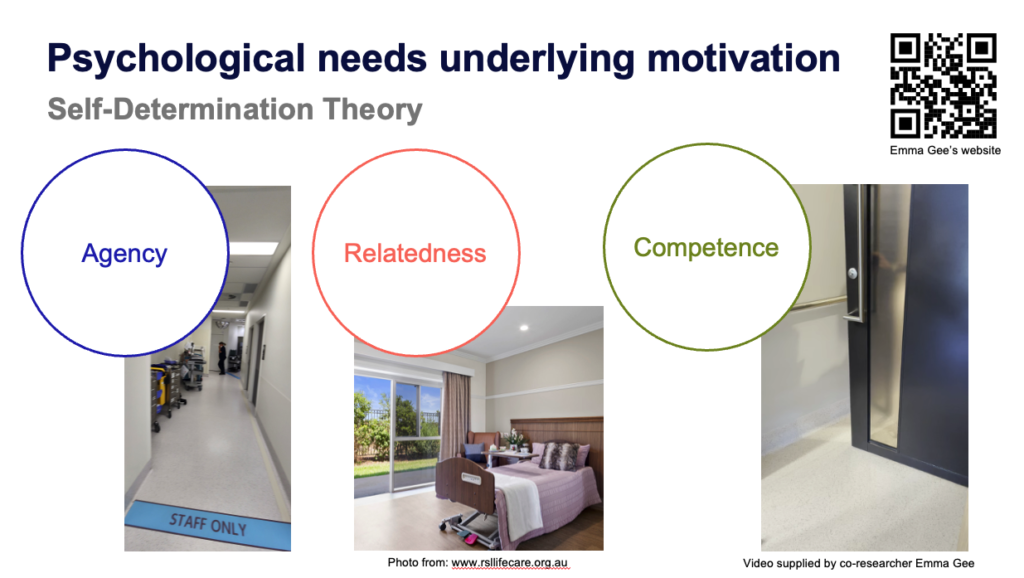
Recently, Dr Ruby Lipson-Smith, a researcher I worked with on the NOVELL project, got in touch. The project explores the redesign of stroke rehabilitation wards, and she’s presenting at the World Congress on Neurorehabilitation next week, sharing work on how hypothetical and virtual designs might support motivation during rehabilitation. As she prepared her slides, she asked for a video I’d shared with her during a hospital admission, one highlighting a bedroom door that creates unnecessary challenges for someone trying to move around their environment. Watching it back, I honestly couldn’t tell you what medication I was on!
In her presentation, Ruby uses the video to show how the built environment can affect the psychological needs underlying motivation. When a person can’t do the things they want to do, their sense of competence takes a hit, and so does their motivation. Good design isn’t just about how things look. It’s about how well it works for the people using it.
What struck me most was that something small I noticed and shared from my own rehabilitation is now helping inform a conversation about how we design spaces for future stroke survivors. This is why lived experience matters. Our experiences aren’t just stories to listen to and then move on from. They can contribute to research, challenge assumptions and help shape the environments where people recover.
Rehabilitation is still an ongoing part of my life, and sharing my experiences can mean revisiting difficult moments and being vulnerable. I can’t change my own journey. But if it helps researchers and clinicians think differently, and helps future stroke survivors encounter fewer barriers along the way, then there’s real purpose in continuing to share.
Our lived experience doesn’t stop being valuable when rehabilitation ends, particularly when, for many of us, rehabilitation never truly ends.