
 I recently had an amazing opportunity to meet with speech therapists involved in curriculum development to explore how I could bring my lived experience into speech therapy education. The goal was to help future speech therapists understand what person-centred care really looks and feels like from the other side of the intervention.
I talked them through an example presentation, Transforming Speech Therapy Education through Lived Experience, showing how I could weave my stroke story, swallowing techniques and real-life experiences into the learning. It’s hard to believe I once couldn’t even move my tongue or feed myself, and that my needs and the interventions that supported me changed so much over time.
 I write in my book:
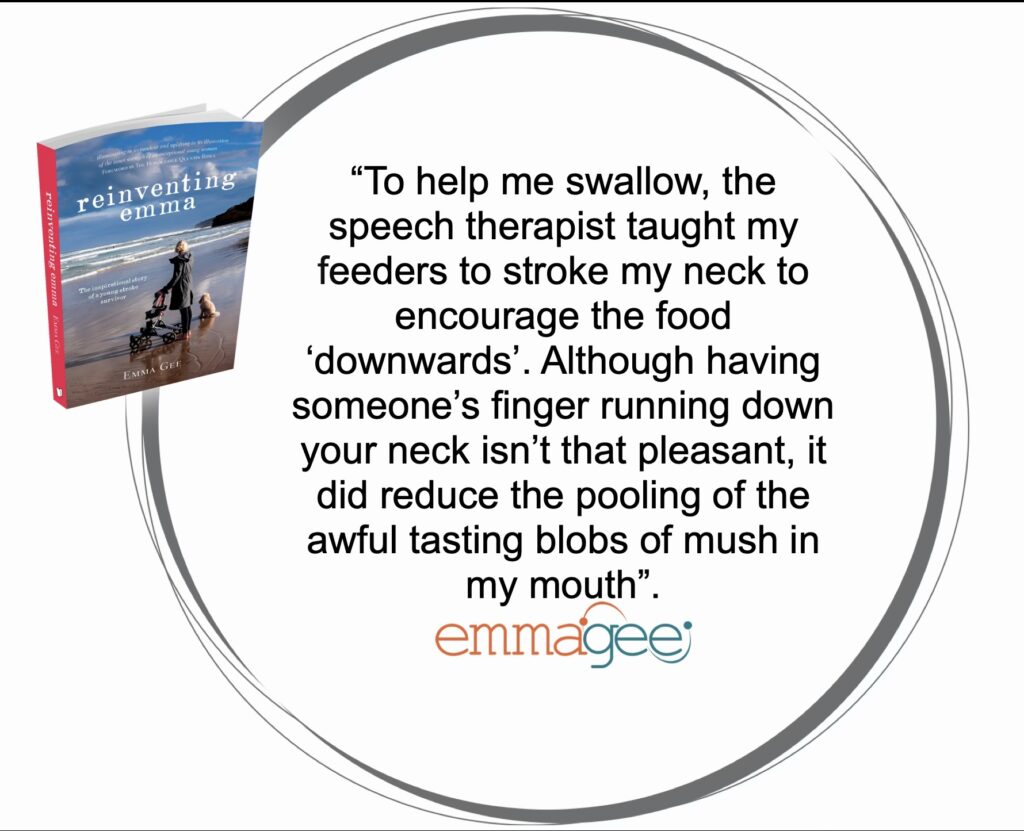
To help me swallow, the speech therapist taught my feeders to stroke my neck to encourage the food ‘downwards’. Although having someone’s finger running down your neck isn’t that pleasant, it did reduce the pooling of the awful tasting blobs of mush in my mouth.
Reinventing Emma, page 103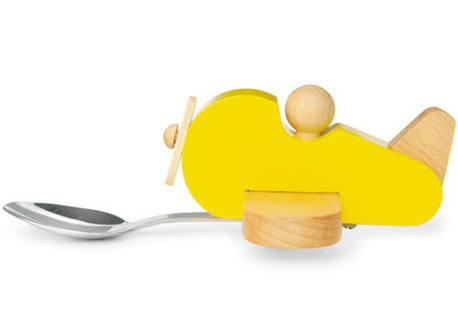
One story I shared was about a nurse who thought it would be fun to feed me using the aeroplane game, complete with a spoonful of purée flying towards my mouth. She may have meant to make the experience entertaining, but from my perspective, trapped in a body I couldn’t control, it was deeply upsetting and demeaning. It affected the rapport we were building because I didn’t feel understood. Her intention was to make me smile. The impact was that I felt misunderstood.
Good clinical care is about so much more than delivering an intervention. It’s about understanding the person, their feelings, their preferences and what matters to them. I’m excited about the possibility of working with speech therapy students to help them reflect on how their everyday interactions can build trust, preserve dignity and strengthen therapeutic relationships.
Because if we want to transform person-centred care, we need to do more than teach students what to do. We need to help them understand what it feels like to be the person receiving that care.