
 I’m sitting with a hot coffee in my hands just minutes before a meeting is about to start. And once again, I’m faced with a familiar predicament:
Do I enjoy this coffee and be late, or leave it so I can get to the meeting on time?
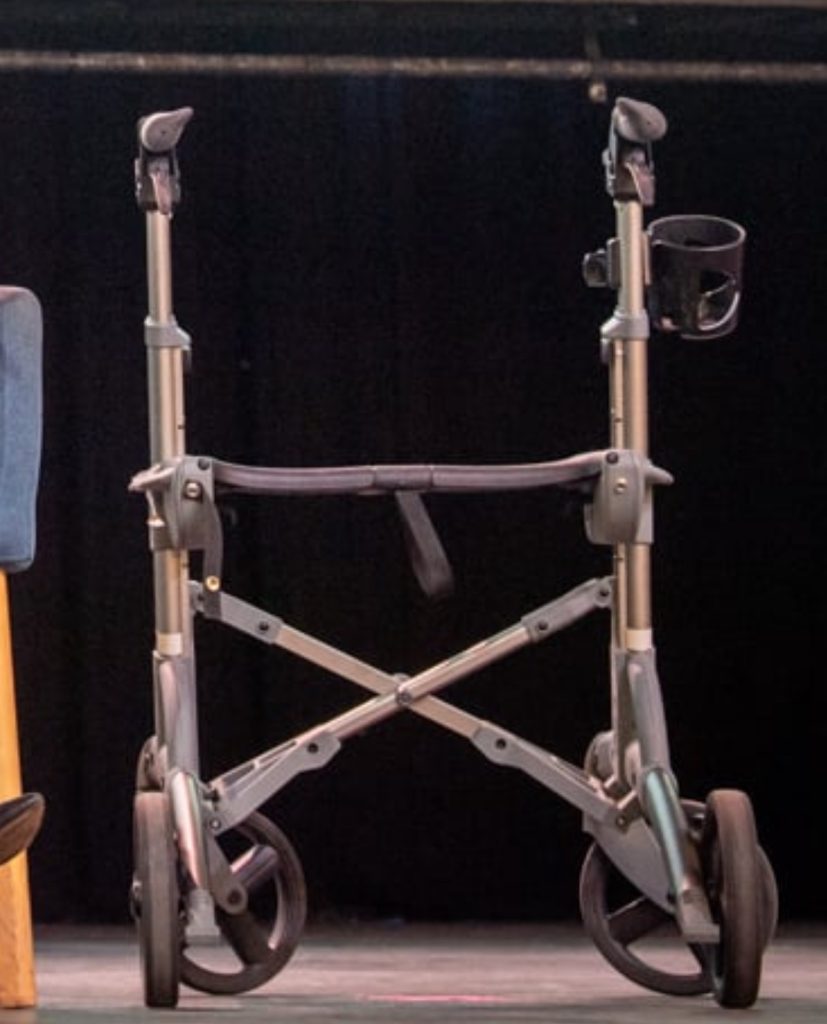
Because as a person who uses a walking frame (and as someone with lived experience of disability) I can’t walk and hold a coffee at the same time. And thanks to the ongoing lack of a strong, reliable, well-designed cup holder that can attach to my walker, this dilemma is much more common than it should be.
I’ve tried cup holders before. Many times. They’re usually designed for prams or bikes and never for the realities of assistive mobility devices. They snap off, get ripped during transport, or simply aren’t built for the force and movement my walker endures every day.
So, my coffee dilemma continues.
But something changed last week.
I had the opportunity to meet with a Swinburne design team. A team of eight passionate designers eager to create a solution with me, not just for me. We sat together and unpacked the reality of what afunctional cup holder needs to be. Not theoretically. But practically, in the real world I navigate every single day.
We talked through weight distribution, shape, durability, placement, vibration, ease of cleaning, and what happens to a cup holder when a walker folds, bumps, tilts, or sits in the boot of a car. The kind of details that rarely make it into a design unless someone who actually uses the equipment is in the room.
That’s the power of lived experience.
And my involvement isn’t just for me. My genuine hope it that every time someone with lived experience sits at a design table, it pushes the work closer to something really useful and also inclusive. It ensures the final product doesn’t just “meet requirements,” but actually supports independence, dignity, and reduces the HUGE effort of everyday life.
As an occupational therapist and a lived experience consultant, this is exactly the type of work I want to do more of. Good design isn’t just about creativity or engineering. It’s about understanding the lived experience of the user. And it’s about designing with, not for.
There are countless factors that designers may overlook without a lived experience lens. But together, with open conversation, co-design, and real-world insight, I feel we can bridge that gap.
And I have no doubt that this Swinburne team will create something robust and thoughtful. Something that I and so many others will use for years to come. I’m excited for the day when I can stroll into my meetings on time, coffee in tow, without having to choose between caffeine and punctuality.
A future where accessibility isn’t an afterthought, but a foundation.
A future where lived experience isn’t a “nice addition,” but an essential part of the design process.
And a future where solutions truly match the lives of the people who use them.
How could you incorporate someone’s lived experience into designing a new piece of equipment or resource?