
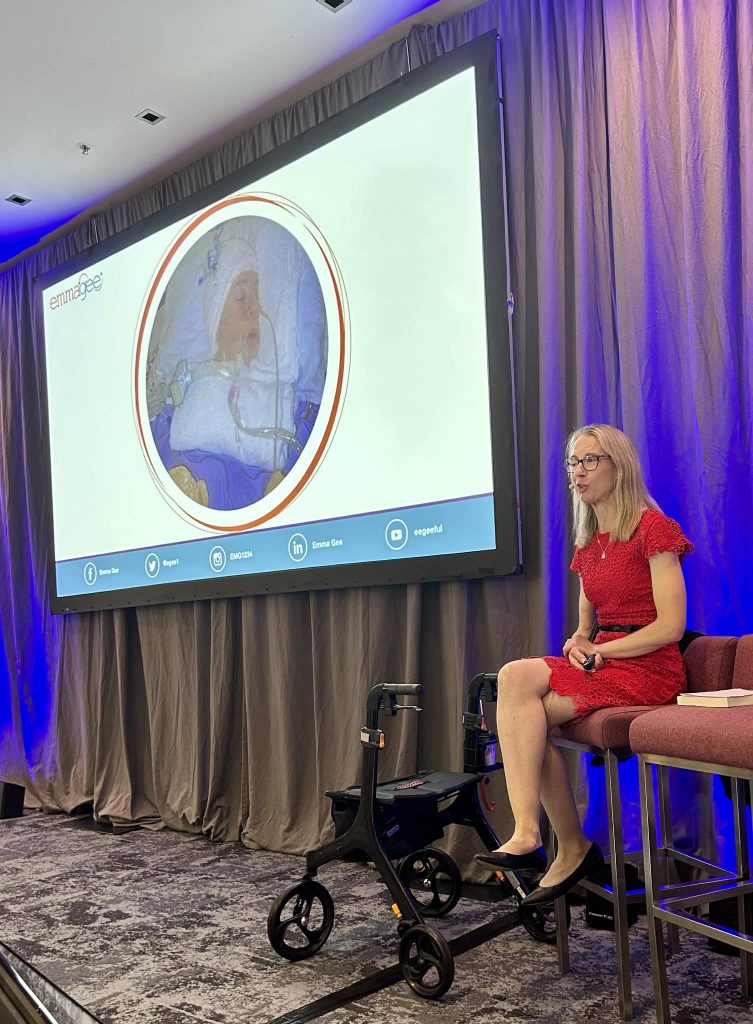
 I recently was invited to be a keynote speaker at an IPSEN event. Here is a snippet of how my presentation was introduced:
Today, Emma will share her personal journey as a stroke survivor, with a particular focus on the powerful dual insight she brings as both a provider and recipient of care. She will also highlight the significant value of the work you do at IPSEN, and how being truly Focused to Win can profoundly impact the experiences of those who rely on our services.
People often see my work through the lens of my achievements. This can be that talks I give or the systems I influence.
But what I was trying to name recently with this talk was something quieter and harder to hold. That being how much of life after stroke depends on other people choosing to stay focused. Not just present, but invested in the journey and the outcome.
When the people around us disengage or aim at different targets or outcomes to us, it doesn’t just slow progress; It makes it harder for us to keep going.
I spoke as both a stroke survivor and a therapist, weaving lived experience into the theme of my talk: focus to win. I shared how treatments like toxin therapies have supported me for 18 years, and how its effectiveness is gradually diminishing.
I was honest about where I am right now. I made note early on that due to toxin therapy become less effective, that they may notice my speech getting harder to understand at the tail end of my presentation. I wanted them to see it happening in real time. Not for sympathy, but for understanding. Because their work, even when it feels distant from day-to-day life after stroke, it directly shapes whether people like me are left grappling or supported.
At the end of the session, during Q&A, an IPSEN employee asked a question that stopped me:
“If you reflect on your achievements, are you amazed by what you’ve accomplished?”
I hesitated. Not because I hadn’t achieved anything but because celebration after stroke is complicated. When surviving becomes normal, achievements can feel quietly absorbed rather than loudly marked. So I answered honestly.
Maybe inwardly, I’m chuffed but quietly so. Much of what I’ve achieved had to become “normal” just to survive. When effort is constant, success doesn’t always feel exceptional. It feels necessary.
What I’m learning, though, is that progress isn’t just about personal grit. It’s about collective focus. When others choose to stay engaged, to keep aiming for better, there’s a ripple effect. And sometimes, that shared focus is what makes it possible for someone else to keep winning at all.
What amazes me most isn’t what I’ve done but how difficult it has been to celebrate doing it.