
 I recently listened to The Imperfects podcast episode “You’re Full of Grit” with Dr. Emily, where she spoke about the connection between grit and resilience. It made me reflect deeply on my own journey, particularly the role grit has played throughout my stroke recovery.
While the podcast centred around everyday growth, my mind immediately translated it into the rehabilitation space, forcing me to look at how I’ve survived and rebuilt my life over the last two decades.
Grit is often defined as passion and perseverance for long-term goals, but I’ve come to realise there is a quiet ingredient sitting underneath it all: hope.
Without hope, why would we keep showing up when progress is slow, setbacks are constant, and outcomes are entirely uncertain? Grit requires us to persist, but it also demands that we believe our efforts actually matter. I used to think grit was a fixed trait you either had or didn’t, but now I see it as a practice. Grit is a muscle developed through repetition, feedback, and meaningful support.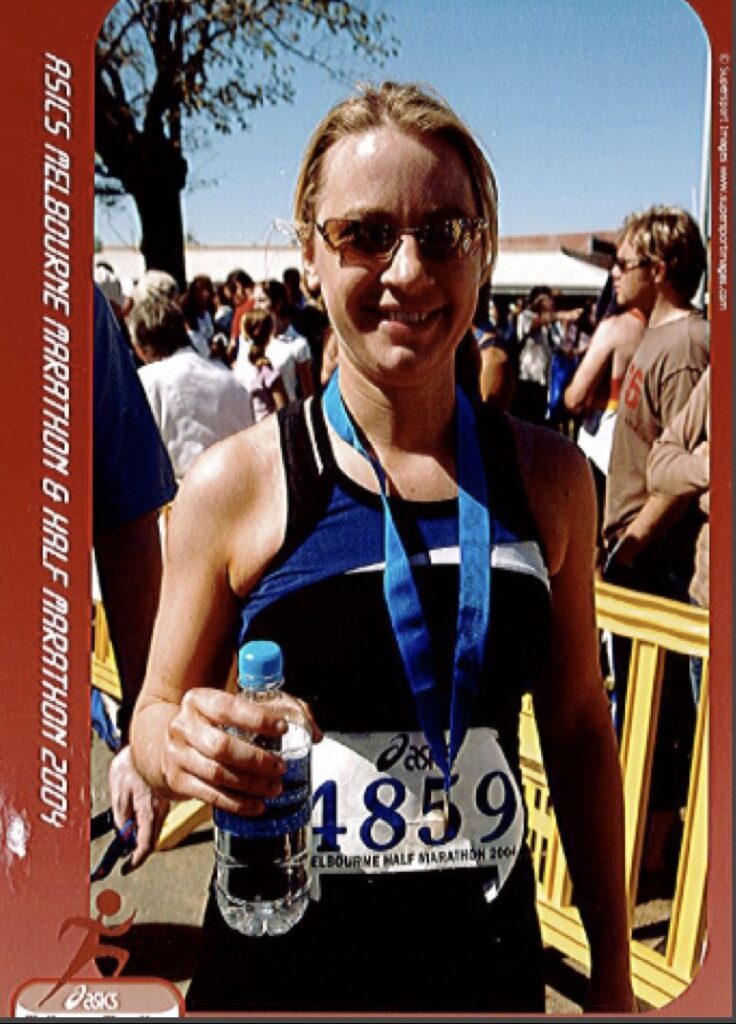
Before my stroke, running was the ultimate expression of grit in my life. It wasn’t just exercise for me, it was where I found time-out, connection with friends, and hope for future races.
When the stroke happened, I lost that identity almost overnight. For a long time, I grieved the “old Em.” But as I slowly rebuilt my life and learnt again how to breath and swim, I discovered something. Those key values that running gave me were still available to me. I just had to find new ways to connect to them. And I found them in swimming and yoga.
However, there is a dark side to perseverance that we rarely talk about. We are told to never give up, but holding on too tightly can come at a devastating cost.
Early in my recovery, desperate to prove that my intellect wasn’t trapped inside my stroke-affected body, I enrolled in a Master’s of Occupational Therapy. I wasn’t doing it because it aligned with my values; I was doing it to prove to the world that I wasn’t dumb. And when I was in the course, I found myself lonely and realised it wasn’t sustainable.
Eventually, I chose to walk away and defer my studies. At the time, it felt like a failure, but looking back, it was an act of profound letting go.
By stepping away from a goal that no longer served me, I re-entered my new world more fully, opening myself up to genuine support and nurturing interests.
Grit isn’t about becoming the person I was before my stroke; it is about continuing to practice, persevere, and build a meaningful life around health, connection, contribution, and hope.