
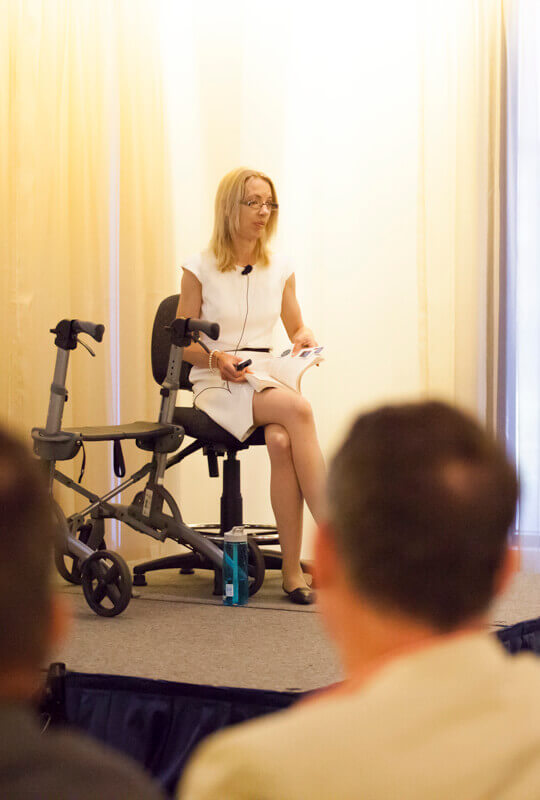
 Advocacy is powerful. It can protect rights, open doors, and ensure needs are met. As both a stroke survivor and an occupational therapist, I have experienced advocacy from two deeply personal perspectives; as a professional who supports others, and as someone who has relied on it myself.
There is no doubt that advocacy plays a vital role in recovery and health care. There have been times in my recovery when I have been too unwell, vulnerable, or exhausted to advocate for myself. During those times, others have stepped in with the best intentions and I’m so grateful.
But there is an important distinction between advocacy and self-advocacy.
While others may advocate for us, they do not always advocate with us.
There have been moments where decisions were made and roles taken on my behalf that were not based on what I needed or wanted, but on what others believed was best. Even when intentions were good, the outcome left me feeling unheard, frustrated, and disconnected from my own recovery. It also created an unexpected emotional burden: guilt for feeling ungrateful when someone was “just trying to help.”
This is the complicated reality of advocacy when it replaces, rather than supports, a person’s voice.
Self-advocacy is the most authentic and empowering form of advocacy. It is about being seen as the expert in your own life. But self-advocacy is not always easy, especially when communication is difficult. That’s where supported self-advocacy becomes so important.
I remember one particular occasion when I knew I needed to speak up, but my capacity to do so felt overwhelming. My speech wasn’t strong, my emotions felt close to the surface, and I feared I wouldn’t be able to articulate my perspective clearly. Instead of staying silent or internalising my concerns, I found another way.
I organised a meeting with a team of doctors. With help, I wrote a letter and read it aloud during the appointment. I also sent an electronic copy beforehand, knowing that my spoken words might not fully capture what I needed to say. I had someone support me by helping me prepare and by getting me to the appointment, but the message itself was mine.
It wasn’t my ideal version of self-advocacy, but it was enabled self-advocacy and that made all the difference. I was heard and my perspective was on record.
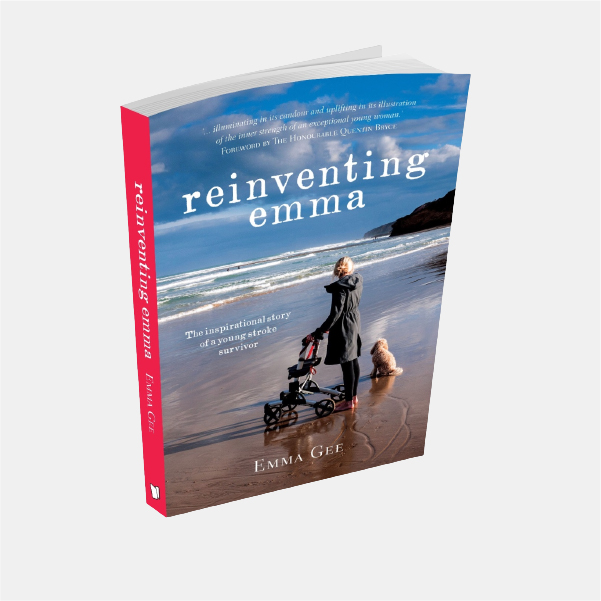 I write in my book:
They seem to barely notice I am there. I am sitting in front of the enormous image of my own brain, and the deadly AVM inside it, while they talk to each other, almost excitedly, about the severity of the problem. It’s good to have Dad by my side, a doctor who can speak their language. He is also my advocate and is as horrified as I am by the real implications of the image on the wall. Thankfully, he is able to challenge this room full of experts to explain themselves clearly.
Reinventing Emma, Page 40
As an occupational therapist, this experience has deeply shaped how I view advocacy. Too often, we assume how another person wants to express themselves. We decide which issues are important, which battles are worth fighting and which needs should take priority. In doing so, we may unintentionally take away choice. Those decisions are not ours to be made on behalf of someone else.
True advocacy should never silence the person it aims to support.
The question we should be asking is not, “How can I advocate for you?” but rather, “”How can I advocate with you?” or “How can I support you to advocate for yourself?”
When people are empowered to use their own voice in their own way, dignity, autonomy, and trust are preserved. And that is where real advocacy begins.