
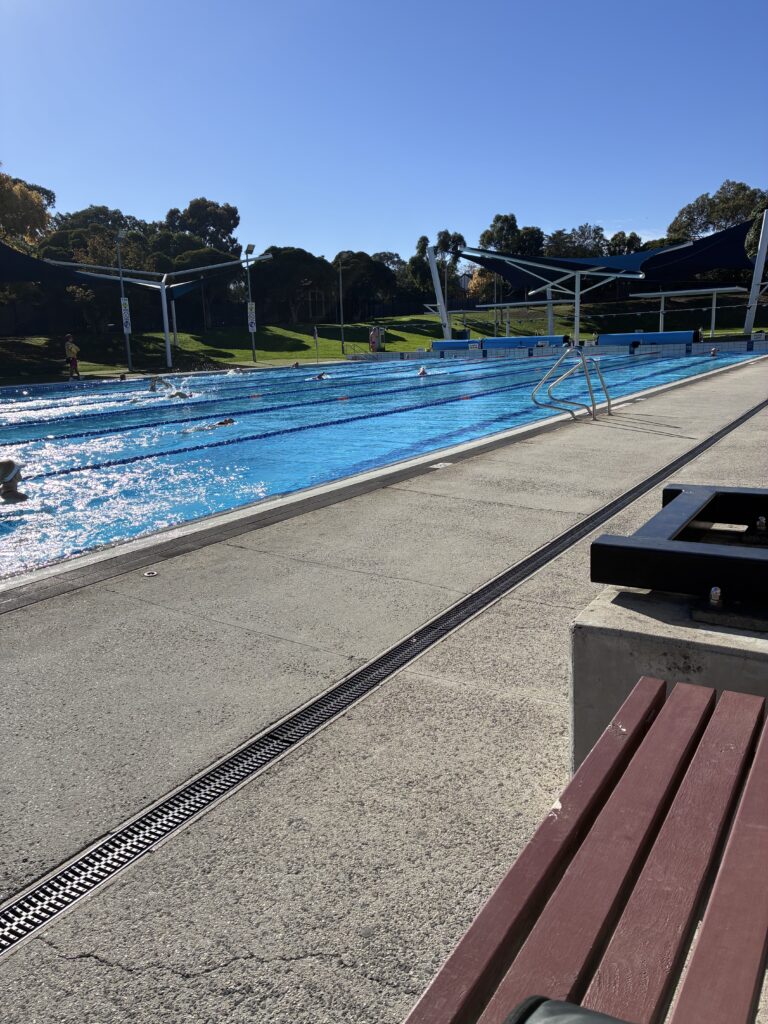
 There was a time when getting into the pool meant peeling myself off a sun-warmed towel, slipping into cool water, and floating without a second thought. Then came the stroke and relearning what swimming meant to be. And since then, my eye graft has added a whole new layer to this once simple activity.
For two and a half years, swimming was off the table. My eye became sensitive to light, vulnerable to infection, and reactive to chlorine. The idea of submerging myself in a public pool felt like a huge risk with so much effort and when something you love becomes that complicated, it’s easy to let it go.
But on my recent holiday, I decided to experiment.
I went through the steps of putting Glad Wrap over my eye, getting into a wetsuit and putting on a hat to reduce the glare. It was not quick, nor easy, but the moment I got into the water, everything shifted. I felt the relief in my hips, neck and arms remembering the sensation of floating.
I had forgotten just how good it feels to be held by water.
Still, alongside that joy was a quiet fear and thinking that this might only be something that can happen on a holiday when life slows down. There’s time, there’s help, and my parents were there to carry the load and make the effort feel manageable.
I decided to try at home. I went to my local pool and went through the same process and effort with quiet determination.
And it was phenomenal.
Afterwards, my support worker checked my eye which is usually red and raw from chlorine. “Looks good, Em,” they said. Relief flooded my body. Not just physically, from moving my body after a long flight, but emotionally. I learnt that this is something that I can do again, it just looks different.
I write in my book about my experience with swimming after my stoke:
An early therapy I was really looking forward to was ‘hydro’ or warm water therapy. I secretly clung to the hope that the water would wash away my disability and my balance would be miraculously restored. First, though, I needed to improve my breathing and swallowing, as my medical team feared I would aspirate if I entered the water.
Reinventing Emma, page 124
I’m learning that just because something becomes harder doesn’t mean it becomes impossible. Sometimes we talk ourselves out of the things we need most because the effort feels overwhelming. But sometimes, all it takes is one “what if I tried?” moment to remind us what’s still available.
For me, the relief and freedom I get from being in water is still there. It just requires a little more planning, a little more patience, and a lot more compassion for myself. And now that I’ve felt it again, it’s worth every bit of effort.
Instead of asking yourself “is this too hard?” we can ask ourselves “How can I make this possible?”