
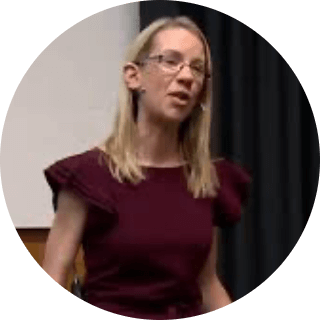
 Sometimes, living with a disability means finding really clever ways to keep doing the things you love. For me, one of those things is working remotely and using my voice to share my experiences.
Since my stroke I’ve found that extensive talking and projecting my voice is exhausting, so I use an amplifier with a Madonna-style headset microphone. It’s a brilliant piece of equipment that helps me be heard, conserve my energy, and participate in work that matters to me.
This piece of assistive technology solves this problem for me. Except right now, it presents another, different problem.
I have a screw coming through my skin behind my right ear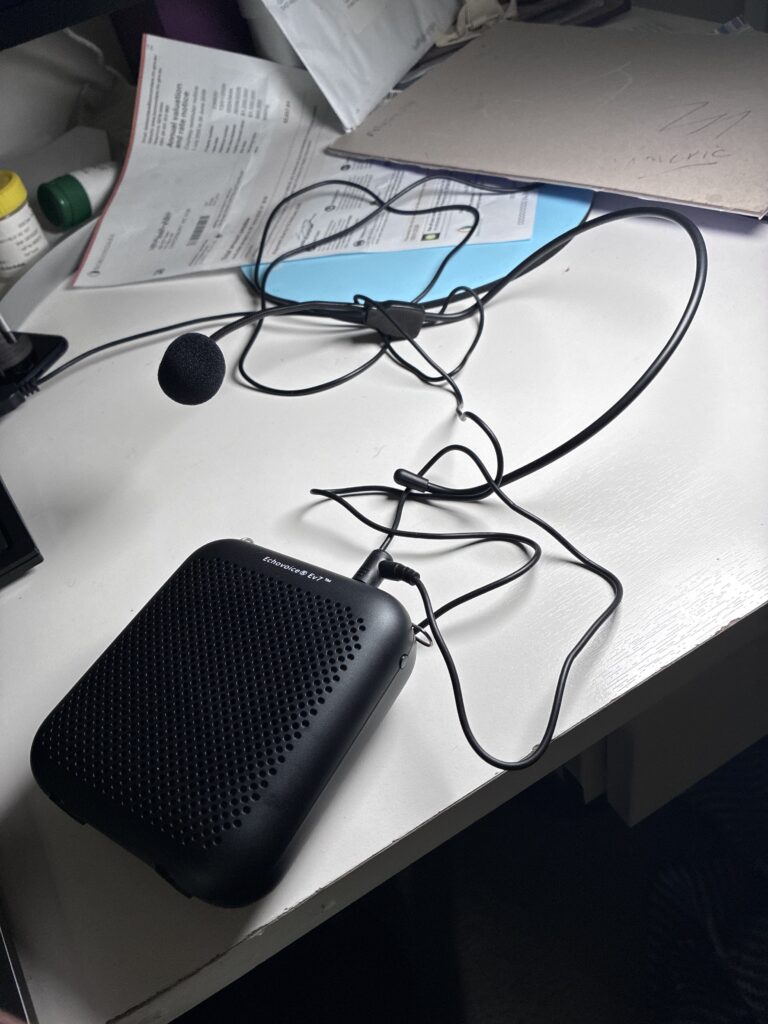 from my craniotomy, and unfortunately, the headband of the microphone sits right across that very sore spot. So the equipment that enables me to use my voice for longer periods can also cause pain and irritation when I wear it for too long.
This is something I think we often miss when we talk about assistive technology and rehabilitation. One recommendation can solve one problem while quietly creating another. Disability is rarely that straightforward and we need to look beyond the simple question of whether a solution works and understand what it actually takes for that solution to work for the person. If it causes other pain, fatigue or another barrier, is it really a solution? Perhaps there is another, less obvious way to go about the ways we support someone or the assistive technology recommended.
For me, this little microphone is still incredibly helpful but I just have to balance its benefits with the impact it has on my very sore head.
Perhaps that’s the bigger lesson here.
Good disability support isn’t about finding a one-size-fits-all solution; it’s about understanding the person contextually for the situation and adapt the solution around them.
Sometimes the best solution isn’t perfect. It’s simply the one that helps you do what matters to you without creating another problem you have to solve along the way.